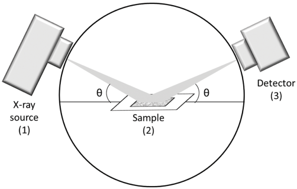
X-ray scattering measures the patterns, intensities, and angles of scatter produced when a sample is illuminated by an x-ray beam. X-ray scattering is advantageous as it is a non-destructive technique, typically used alongside x-ray microscopy and x-ray spectroscopy. Information on shape, dispersity, sample size, porosity, morphology, and orientation are some of the few things that can be measured via x-ray scattering.
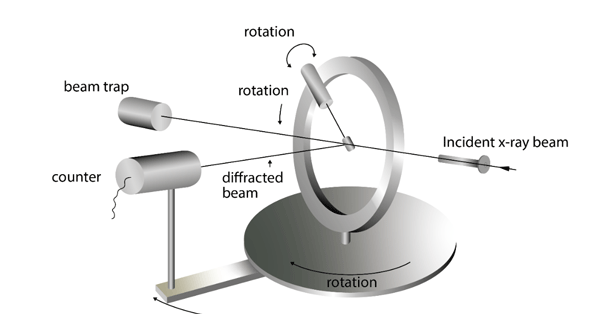
X-ray scattering can be elastic, or inelastic. There are different x-ray scattering techniques, the most common being x-ray diffraction/crystallography. This technique relies on the crystalline structure of a sample, and typically needs very high energy hard x-rays to obtain atomic level information.
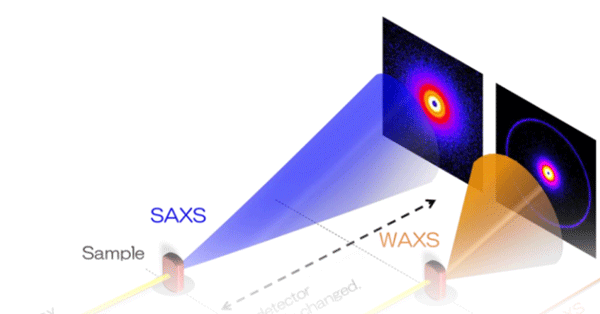
Other techniques include small-angle x-ray scattering (SAXS) and wide-angle x-ray scattering (WAXS). X-rays can be elastically scattered at a range of different angles dependent on the sample. In this way, the angle of the scattered x-rays can give information on the physical properties of a sample. SAXS provides nanoscale resolution, whereas WAXS provides atomic resolution. Both techniques can be done simultaneously by increasing or decreasing the space between the detector and sample.
Recommended Direct X-Ray Detectors
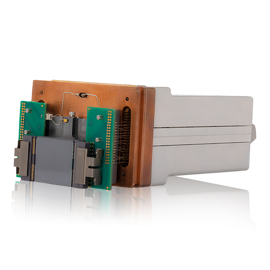
PI-MTE3
Fully In-Vacuum, Direct Detection X-Ray Cameras
- Fully in-vacuum CCD camera with scattering angle flexibility
- ~10 eV to 30 keV x-ray energy sensitivity
- Large sensor formats: 2k and 4k
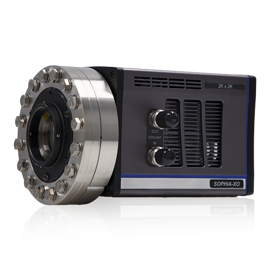
SOPHIA-XO
EUV and Soft X-Ray Cameras
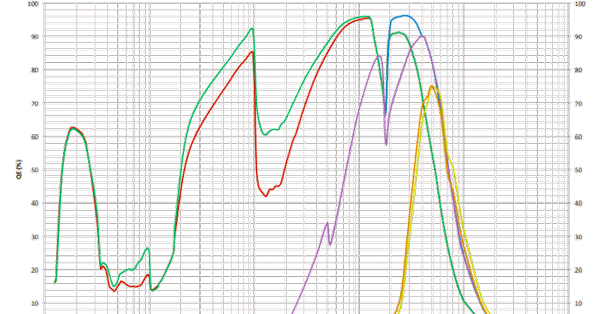
- ~5 eV – 30 keV coverage with >95% peak QE
- 2k x 2k and 4k x 4k formats
- 1, 2 and 4 port readout and -90℃ cooling
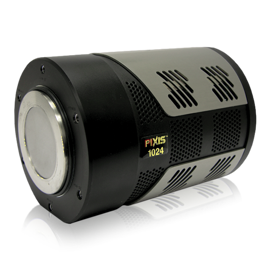
PIXIS-XB
High Performance, Low Noise X-Ray Camera
- ~3 – 20 keV x-ray sensitivity
- Beryllium (Be) window in vacuum chamber
- Flexible dual-amplifier readout design
Recommended Indirect X-Ray Detectors
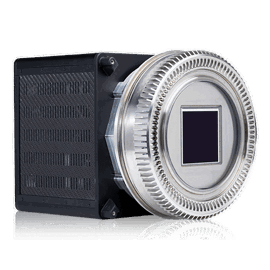
COSMOS
Large Format, Low-Noise Astronomy Cameras
- Large 81 x 81 mm sensor size
- Up to 20 fps full frame
- Deeply cooled, low noise sensor
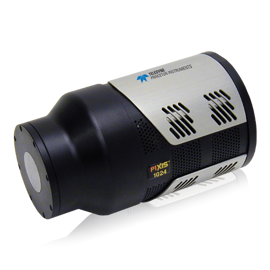
PIXIS-XF
Low Noise, Indirect Detection X-Ray Camera
- <3 to >20 keV x-ray sensitivity
- Front- or back-illuminated CCD options
- Flexible dual-amplifier readout design