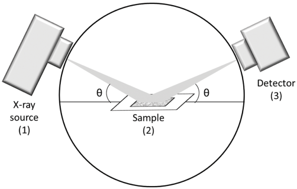
X-ray scattering measures the patterns, intensities, and angles of scatter produced when a sample is illuminated by an x-ray beam. X-ray scattering is advantageous as it is a non-destructive technique, typically used alongside x-ray microscopy and x-ray spectroscopy. Information on shape, dispersity, sample size, porosity, morphology, and orientation are some of the few things that can be measured via x-ray scattering.
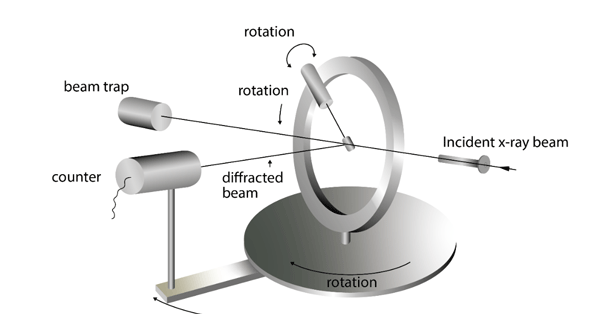
X-ray scattering can be elastic, or inelastic. There are different x-ray scattering techniques, the most common being x-ray diffraction/crystallography. This technique relies on the crystalline structure of a sample, and typically needs very high energy hard x-rays to obtain atomic level information.
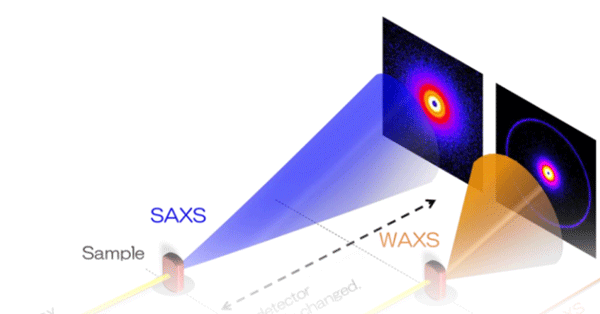
Other techniques include small-angle x-ray scattering (SAXS) and wide-angle x-ray scattering (WAXS). X-rays can be elastically scattered at a range of different angles dependent on the sample. In this way, the angle of the scattered x-rays can give information on the physical properties of a sample. SAXS provides nanoscale resolution, whereas WAXS provides atomic resolution. Both techniques can be done simultaneously by increasing or decreasing the space between the detector and sample.
Resources from the Learning Center
View All