
How SMi and Teledyne Photometrics are revolutionizing diagnostics throughput
SMi: Single Molecule Imaging

Introduction
Modern healthcare and life sciences strongly benefit from technological advances of equipment. Determining the biochemical components of specific samples is essential for early detection, accurate disease identification, and treatment monitoring. The outlook of processing more samples in less time offers significant advantages, making throughput an essential part in improving patient outcomes and reducing the burden on healthcare systems. High-throughput ultimately enables faster decision making, better resource allocation, broader access to care, and improved access to large screening programs - especially during outbreaks.
Here we present a tightly engineered solution for high content optical screening of samples. The instrument automates fluorescence imaging and single molecule detection with high-throughput workflows for unmatched screening capabilities. The optical system (SMi) and detector (Teledyne Photometrics) leverage high throughput applications such as those needed for early cancer detection or panel diagnostics needed to distinguish infectious diseases during a pandemic.
Background
Dr. Andrew Thompson of the University of Cambridge was searching for new anti-clotting drugs but found his choice of experimental tools to study their properties was extremely limited. He proposed the direct observation of drug interactions with their target proteins, but no instrument existed for such measurements.
In 2014, he turned to Professor James Brozik of Washington State University, whose team developed a system for tracking millions of drug-protein interactions at single-molecule resolution, offering deep insights into drug behavior. Their combined knowledge in advanced optics and pharmacology synergized in the development of SMi technology. When realizing the technology’s potential for drug discovery, they published the initial results and founded a company to develop a new prototype for rapid, high throughput super-resolution images that later became the source of several patents.
The final breakthrough came during the COVID-19 pandemic, which shifted SMi's focus to high throughput diagnostics, an essential tool during a pandemic. The enormous potential of this technology was made clear when receiving £1.9 million from Innovate UK, allowing SMi to develop a diagnostic platform capable of screening diseases with unprecedented resolution and speed. Their use of microarrays made the technology particularly adaptable as it enabled simultaneous testing for multiple diseases.
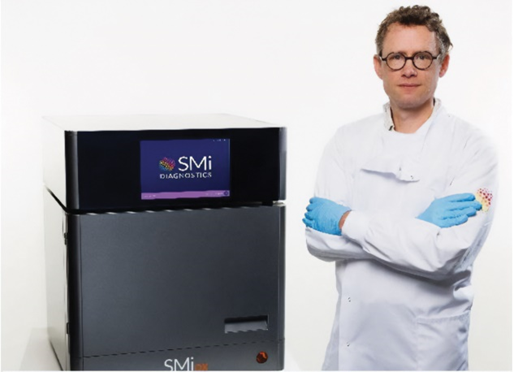
Figure 1: The SMi instrument containing the Teledyne Kinetix camera, alongside Dr. Andrew Thompson
Transition to the Kinetix
Transitioning from a research prototype to commercial diagnostic system presents unique challenges. SMi needed to refine manufacturing processes, improve system reliability, and source compatible OEM components. Automation was key to boosting throughput, and the instrument had to meet clinical standards and user needs.
A major upgrade was integrating of the Teledyne Photometrics' Kinetix sCMOS camera into the SMi system. Their original camera had lower speed, lower resolution, and required complex thermal management, challenges that were alleviated by switching to the Kinetix.
The Kinetix offered improvements in resolution, sensitivity, and quantification across a 10 megapixel array. The compact design of the Kinetix (with USB interface and a robust SDK) simplifies integration into OEM products, while Teledyne’s industry-leading reliability and warranties made it idea for commercial deployment.
SMi developed two product versions using Teledyne’s OEM camera technology: a research instrument, enabling high-throughput drug screening, and one dedicated to diagnostics to provide an automated clinical platform. Using the Kinetix sCMOS camera, SMi has developed tools that provide ultra-high sensitivity as well as throughput, offering the potential for accelerated drug development and disease detection at scale.
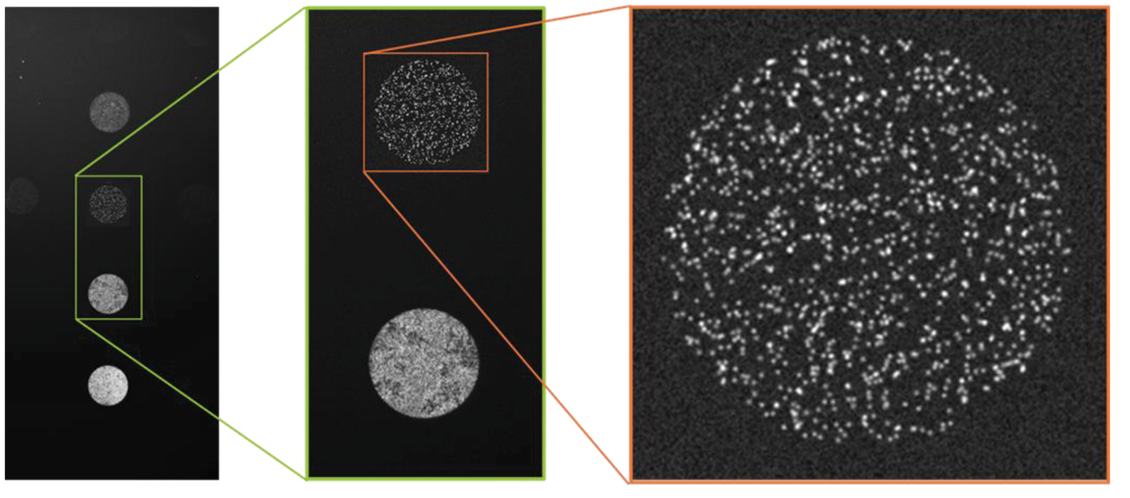
Figure 2: Using the Kinetix camera, SMi can detect single molecules at high resolution, over an extremely large area.
Conclusion
SMi Systems revolutionizes diagnostics, addressing relevant challenges in the healthcare system by proving unprecedented throughput and high precision. SMi’s selection of Teledyne Photometrics' Kinetix sCMOS camera came about through the careful selection of a manufacturer that could deliver a best-in-class solution alongside OEM integration support. The Kinetix offers high-resolution imaging combined with easy integration into SMi’s product platform.
As a commercial solution the Kinetix is an obvious choice for SMi.
To learn more about SMi, visit: smisystems.co.uk
